
Authors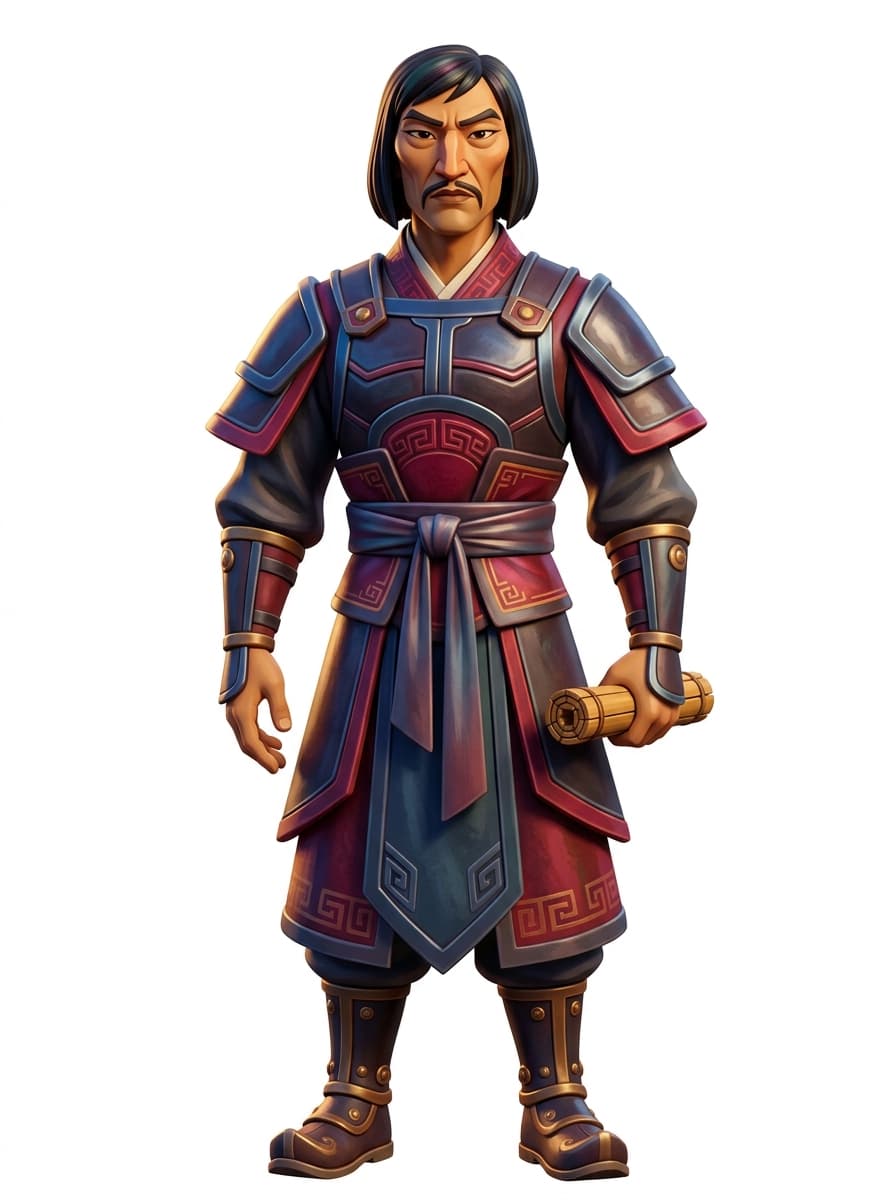
Sun Tzu
Ancient China (traditionally 6th century BC)
Sun Tzu was an ancient Chinese general believed to have written The Art of War, one of the most famous books ever written about strategy and leadership. Its ideas about planning, patience, and understanding your challenges are still studied today, far beyond the battlefield — in business, sports, and everyday life. Very little is known for certain about his real life.
Quotes
“In the midst of chaos, there is also opportunity.”
“All warfare is based on deception.”
“If you know the enemy and know yourself, you need not fear the result of a hundred battles.”
“There is no instance of a country having benefited from prolonged warfare.”
“Supreme excellence consists in breaking the enemy’s resistance without fighting.”
“The Moral Law causes the people to be in complete accord with their ruler, so that they will follow him regardless of their lives, undismayed by any danger.”
“The Commander stands for the virtues of wisdom, sincerity, benevolence, courage and strictness.”
“By Method and discipline are to be understood the marshalling of the army in its proper subdivisions, the gradations of rank among the officers, the maintenance of roads by which supplies may reach the army, and the control of military expenditure.”
“Now the general who wins a battle makes many calculations in his temple ere the battle is fought.”
“The general who loses a battle makes but few calculations beforehand.”
“Thus it may be known that the leader of armies is the arbiter of the people’s fate, the man on whom it depends whether the nation shall be in peace or in peril.”
“Therefore the skilful leader subdues the enemy’s troops without any fighting; he captures their cities without laying siege to them; he overthrows their kingdom without lengthy operations in the field.”
“Now the general is the bulwark of the State: if the bulwark is complete at all points; the State will be strong; if the bulwark is defective, the State will be weak.”
“The consummate leader cultivates the moral law, and strictly adheres to method and discipline; thus it is in his power to control success.”
“Amid the turmoil and tumult of battle, there may be seeming disorder and yet no real disorder at all; amid confusion and chaos, your array may be without head or tail, yet it will be proof against defeat.”
“Simulated disorder postulates perfect discipline; simulated fear postulates courage; simulated weakness postulates strength.”
“Manœuvering with an army is advantageous; with an undisciplined multitude, most dangerous.”
“A whole army may be robbed of its spirit; a commander-in-chief may be robbed of his presence of mind.”
“Disciplined and calm, to await the appearance of disorder and hubbub amongst the enemy:—this is the art of retaining self-possession.”
“The general who thoroughly understands the advantages that accompany variation of tactics knows how to handle his troops.”
“The general who does not understand these, may be well acquainted with the configuration of the country, yet he will not be able to turn his knowledge to practical account.”
“Hence in the wise leader’s plans, considerations of advantage and of disadvantage will be blended together.”
“If there is disturbance in the camp, the general’s authority is weak.”
“Therefore soldiers must be treated in the first instance with humanity, but kept under control by means of iron discipline.”
“If in training soldiers commands are habitually enforced, the army will be well-disciplined; if not, its discipline will be bad.”
“If a general shows confidence in his men but always insists on his orders being obeyed, the gain will be mutual.”
“When the common soldiers are too strong and their officers too weak, the result is insubordination.”
“When the officers are too strong and the common soldiers too weak, the result is collapse.”
“When the general is weak and without authority; when his orders are not clear and distinct; when there are no fixed duties assigned to officers and men, and the ranks are formed in a slovenly haphazard manner, the result is utter disorganisation.”
“The natural formation of the country is the soldier’s best ally; but a power of estimating the adversary, of controlling the forces of victory, and of shrewdly calculating difficulties, dangers and distances, constitutes the test of a great general.”
“The general who advances without coveting fame and retreats without fearing disgrace, whose only thought is to protect his country and do good service for his sovereign, is the jewel of the kingdom.”
“It is the business of a general to be quiet and thus ensure secrecy; upright and just, and thus maintain order.”
“Hence the saying: The enlightened ruler lays his plans well ahead; the good general cultivates his resources.”
“No ruler should put troops into the field merely to gratify his own spleen; no general should fight a battle simply out of pique.”
“Hence the enlightened ruler is heedful, and the good general full of caution.”
“Thus, what enables the wise sovereign and the good general to strike and conquer, and achieve things beyond the reach of ordinary men, is foreknowledge.”