
Authors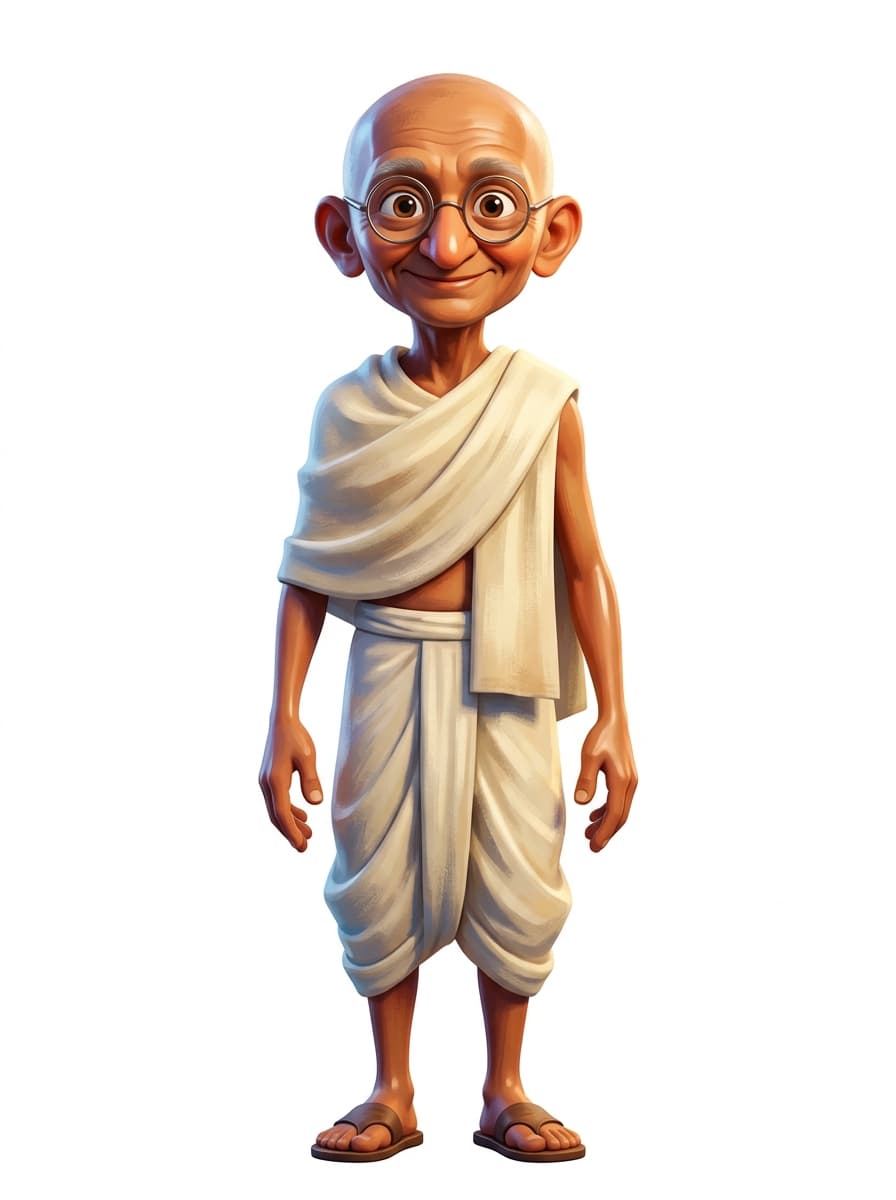
Mahatma Gandhi
1869 – 1948
Mahatma Gandhi led India's peaceful movement for independence from British rule using a method he called nonviolent resistance — protesting unfair laws without ever using violence. In 1930 he led the famous Salt March, walking about 240 miles to the sea to make salt by hand in defiance of a British tax, a protest that drew worldwide attention to India's cause. His approach inspired civil rights movements around the world, including Martin Luther King Jr.'s work in the United States. He is remembered globally as a symbol of peaceful protest and courage.
Quotes
“Strength does not come from physical capacity. It comes from an indomitable will.”
“Non-violence is the greatest force at the disposal of mankind.”
“Earth provides enough to satisfy every man's need but not for every man's greed.”
“You must not lose faith in humanity. Humanity is an ocean; if a few drops of the ocean are dirty, the ocean does not become dirty.”
“You may never know what results come of your actions. But if you do nothing, there will be no result.”
“My life is my message.”
“Freedom is not worth having if it does not connote freedom to err.”
“The weak can never forgive. Forgiveness is the attribute of the strong.”
“A man is but the product of his thoughts. What he thinks, he becomes.”