
Authors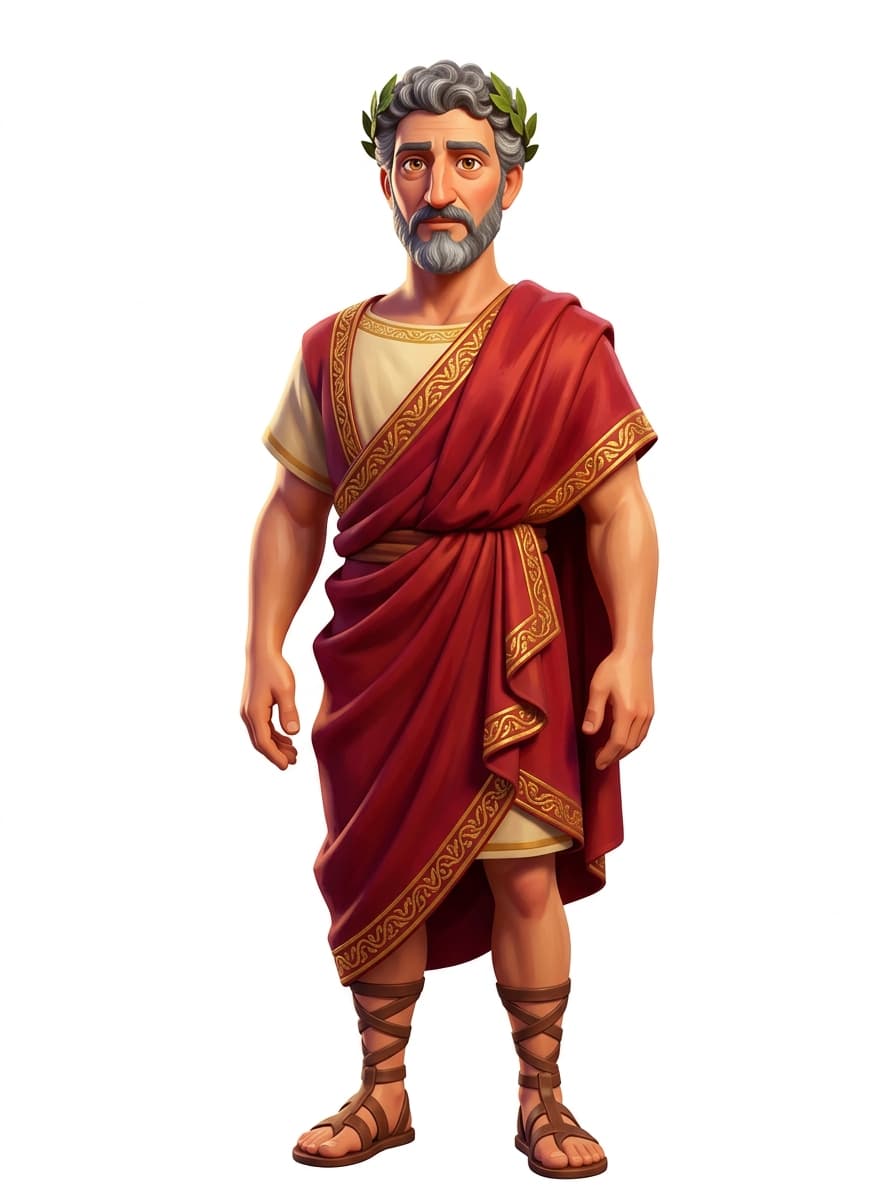
Marcus Aurelius
121 – 180
Marcus Aurelius was a Roman emperor who ruled almost 2,000 years ago and was also a thoughtful philosopher. He is remembered as the last of the "Five Good Emperors" who guided Rome through a long stretch of relative peace and prosperity. While leading his empire, and even while commanding troops on military campaigns, he wrote private notes to himself in Greek about how to stay calm, fair, and wise — never meant for publication, they were later collected into a famous book called Meditations. He is remembered as one of the rare rulers who tried hard to be genuinely good.
Quotes
“You have power over your mind, not outside events. Realize this, and you will find strength.”
“Waste no more time arguing about what a good man should be. Be one.”
“Never let the future disturb you. You will meet it, if you have to, with the same weapons of reason which today arm you against the present.”
“We are made for co-operation, like feet, like hands, like eyelids, like the rows of the upper and lower teeth.”
“The best way of avenging thyself is not to become like the wrong doer.”
“Give thyself time to learn something new and good, and cease to be whirled around.”
“Men exist for the sake of one another. Teach them then, or bear with them.”
“Look round at the courses of the stars, as if thou wert going along with them.”
“that which is an obstacle on the road helps us on this road.”
“Be like the promontory against which the waves continually break, but it stands firm and tames the fury of the water around it.”
“The art of life is more like the wrestler’s art than the dancer’s, in respect of this, that it should stand ready and firm to meet onsets which are sudden and unexpected.”
“Adapt thyself to the things with which thy lot has been cast: and the men among whom thou hast received thy portion, love them, but do it truly [sincerely].”
“When thou wishest to delight thyself, think of the virtues of those who live with thee; for instance, the activity of one, and the modesty of another, and the liberality of a third, and some other good quality of a fourth.”
“Though thou shouldest be going to live three thousand years and as many times ten thousand years, still remember that no man loses any other life than this which he now lives, nor lives any other than this which he now loses.”
“For a man cannot lose either the past or the future: for what a man has not, how can any one take this from him?”
“Observe constantly that all things take place by change, and accustom thyself to consider that the nature of the universe loves nothing so much as to change the things which are and to make new things like them. For everything that exists is in a manner the seed of that which will be.”
“Time is like a river made up of the events which happen, and a violent stream; for as soon as a thing has been seen, it is carried away, and another comes in its place, and this will be carried away too.”
“Often think of the rapidity with which things pass by and disappear, both the things which are and the things which are produced. For substance is like a river in a continual flow, and the activities of things are in constant change, and the causes work in infinite varieties; and there is hardly anything which stands still. And consider this which is near to thee, this boundless abyss of the past and of the future in which all things disappear.”
“Some things are hurrying into existence, and others are hurrying out of it; and of that which is coming into existence part is already extinguished. Motions and changes are continually renewing the world, just as the uninterrupted course of time is always renewing the infinite duration of ages.”
“Asia, Europe, are corners of the universe; all the sea a drop in the universe; Athos a little clod of the universe: all the present time is a point in eternity. All things are little, changeable, perishable.”
“The nature of the universal has this work to do,—to remove to that place the things which are in this, to change them, to take, them away hence, and to carry them there. All things are change, yet we need not fear anything new.”
“Acquire the contemplative way of seeing how all things change into one another, and constantly attend to it, and exercise thyself about this part [of philosophy]. For nothing is so much adapted to produce magnanimity.”
“Consider that before long thou wilt be nobody and nowhere, nor will any of the things exist which thou now seest, nor any of those who are now living. For all things are formed by nature to change and be turned and to perish, in order that other things in continuous succession may exist.”
“Thou must also take heed of another kind of wandering, for they are idle in their actions, who toil and labour in this life, and have no certain scope to which to direct all their motions, and desires.”
“Whatsoever thou dost affect, whatsoever thou dost project, so do, and so project all, as one who, for aught thou knowest, may at this very present depart out of this life.”
“Consider how quickly all things are dissolved and resolved: the bodies and substances themselves, into the matter and substance of the world: and their memories into the general age and time of the world.”
“So will he be able to perceive the proper ripeness and beauty of old age, whether in man or woman: and whatsoever else it is that is beautiful and alluring in whatsoever is, with chaste and continent eyes he will soon find out and discern.”
“Thou hast taken ship, thou hast sailed, thou art come to land, go out, if to another life, there also shalt thou find gods, who are everywhere.”
“If thou shalt find anything in this mortal life better than righteousness, than truth, temperance, fortitude, and in general better than a mind contented both with those things which according to right and reason she doth, and in those, which without her will and knowledge happen unto thee by the providence; if I say, thou canst find out anything better than this, apply thyself unto it with thy whole heart, and that which is best wheresoever thou dost find it, enjoy freely.”
“For all his life long, this is his only care, that his mind may always be occupied in such intentions and objects, as are proper to a rational sociable creature.”
“What is this, that now my fancy is set upon? of what things doth it consist? how long can it last? which of all the virtues is the proper virtue for this present use? as whether meekness, fortitude, truth, faith, sincerity, contentation, or any of the rest?”
“By tranquillity I understand a decent orderly disposition and carriage, free from all confusion and tumultuousness.”
“The next, that all these things, which now thou seest, shall within a very little while be changed, and be no more: and ever call to mind, how many changes and alterations in the world thou thyself hast already been an eyewitness of in thy time.”
“That which makes not man himself the worse, cannot make his life the worse, neither can it hurt him either inwardly or outwardly.”
“Conceit no such things, as he that wrongeth thee conceiveth, or would have thee to conceive, but look into the matter itself, and see what it is in very truth.”
“First, do nothing at all, but what reason proceeding from that regal and supreme part, shall for the good and benefit of men, suggest unto thee.”
“And secondly, if any man that is present shall be able to rectify thee or to turn thee from some erroneous persuasion, that thou be always ready to change thy mind, and this change to proceed, not from any respect of any pleasure or credit thereon depending, but always from some probable apparent ground of justice, or of some public good thereby to be furthered; or from some other such inducement.”
“As for that which is truly good, what can it stand in need of more than either justice or truth; or more than either kindness and modesty?”
“Certainly there is nothing better, than for a man to confine himself to necessary actions; to such and so many only, as reason in a creature that knows itself born for society, will command and enjoin.”
“To comprehend all in a few words, our life is short; we must endeavour to gain the present time with best discretion and justice.”
“Thus must thou according to truth and nature, throughly consider how man's life is but for a very moment of time, and so depart meek and contented: even as if a ripe olive falling should praise the ground that bare her, and give thanks to the tree that begat her.”
“In that which is so infinite, what difference can there be between that which liveth but three days, and that which liveth three ages?”
“If it be right and honest to be spoken or done, undervalue not thyself so much, as to be discouraged from it.”
“Reason, and rational power, are faculties which content themselves with themselves, and their own proper operations.”
“Such as thy thoughts and ordinary cogitations are, such will thy mind be in time.”
“Consider the whole universe whereof thou art but a very little part, and the whole age of the world together, whereof but a short and very momentary portion is allotted unto thee, and all the fates and destinies together, of which how much is it that comes to thy part and share!”
“For it is the truth that I seek after, by which I am sure that never any man was hurt; and as sure, that he is hurt that continueth in any error, or ignorance whatsoever.”
“And as for men, towards them as naturally partakers of the same reason, my care is to carry myself sociably.”
“Worship the Gods, procure the welfare of men, this life is short.”
“Charitable actions, and a holy disposition, is the only fruit of this earthly life.”
“To a reasonable creature, the same action is both according to nature, and according to reason.”
“Let thy mind penetrate both into the effects, and into the causes.”
“As one who had lived, and were now to die by right, whatsoever is yet remaining, bestow that wholly as a gracious overplus upon a virtuous life.”
“This thou must ever be mindful of, as of this also, that a man's true happiness doth consist in very few things.”
“If therefore thou dost truly understand, what it is that is of moment indeed; as for thy fame and credit, take no thought or care for that: let it suffice thee if all the rest of thy life, be it more or less, thou shalt live as thy nature requireth, or according to the true and natural end of thy making.”
“As every fancy and imagination presents itself unto thee, consider (if it be possible) the true nature, and the proper qualities of it, and reason with thyself about it.”
“Remember, that to change thy mind upon occasion, and to follow him that is able to rectify thee, is equally ingenuous, as to find out at the first, what is right and just, without help.”
“For though we are all made one for another, yet have our minds and understandings each of them their own proper and limited jurisdiction.”
“As virtue and wickedness consist not in passion, but in action; so neither doth the true good or evil of a reasonable charitable man consist in passion, but in operation and action.”
“As thou thyself, whoever thou art, were made for the perfection and consummation, being a member of it, of a common society; so must every action of thine tend to the perfection and consummation of a life that is truly sociable.”
“In the morning as soon as thou art awaked, when thy judgment, before either thy affections, or external objects have wrought upon it, is yet most free and impartial: put this question to thyself, whether if that which is right and just be done, the doing of it by thyself, or by others when thou art not able thyself; be a thing material or no.”
“What then is it that may upon this present occasion according to best reason and discretion, either be said or done?”
“For justice cannot be preserved, if either we settle our minds and affections upon worldly things; or be apt to be deceived, or rash, and inconstant.”
“For many things are done by way of discreet policy; and generally a man must know many things first, before he be able truly and judiciously to judge of another man's action.”
“Or should it be so, that the light of a candle indeed is still bright and lightsome until it be put out: and should truth, and righteousness, and temperance cease to shine in thee whilest thou thyself hast any being?”
“It is high time for thee, to understand that there is somewhat in thee, better and more divine than either thy passions, or thy sensual appetites and affections.”
“Remember that all is but opinion, and all opinion depends of the mind.”
“Herein doth consist happiness of life, for a man to know thoroughly the true nature of everything; what is the matter, and what is the form of it: with all his heart and soul, ever to do that which is just, and to speak the truth.”
“What then remaineth but to enjoy thy life in a course and coherence of good actions, one upon another immediately succeeding, and never interrupted, though for never so little a while?”
“And as for this, it proceeds from my neighbour, my kinsman, my fellow: through his ignorance indeed, because he knows not what is truly natural unto him: but I know it, and therefore carry myself towards him according to the natural law of fellowship; that is kindly, and justly.”
“What is it that we must bestow our care and diligence upon? even upon this only: that our minds and wills be just; that our actions be charitable; that our speech be never deceitful, or that our understanding be not subject to error; that our inclination be always set to embrace whatsoever shall happen unto us, as necessary, as usual, as ordinary, as flowing from such a beginning, and such a fountain, from which both thou thyself and all things are.”
“Let this be thy only joy, and thy only comfort, from one sociable kind action without intermission to pass unto another, God being ever in thy mind.”
“And that although thou dost despair, that thou shalt ever be a good either logician, or naturalist, yet thou art never the further off by it from being either liberal, or modest, or charitable, or obedient unto God.”
“For whatsoever it be, that is now present, shall ever be embraced by me as a fit and seasonable object, both for my reasonable faculty, and for my sociable, or charitable inclination to work upon.”
“What object soever, our reasonable and sociable faculty doth meet with, that affords nothing either for the satisfaction of reason, or for the practice of charity, she worthily doth think unworthy of herself.”
“Beget thyself by continual pains and endeavours to true liberty with charity, and true simplicity and modesty.”
“If my present apprehension of the object be right, and my present action charitable, and this, towards whatsoever doth proceed from God, be my present disposition, to be well pleased with it, it sufficeth.”
“Either teach them better if it be in thy power; or if it be not, remember that for this use, to bear with them patiently, was mildness and goodness granted unto thee.”
“Labour not as one to whom it is appointed to be wretched, nor as one that either would be pitied, or admired; but let this be thine only care and desire; so always and in all things to prosecute or to forbear, as the law of charity, or mutual society doth require.”
“Now whatsoever is reasonable, is also sociable, Keep thyself to these rules, and trouble not thyself about idle things.”
“However true goodness, simplicity, and kindness cannot so be hidden, but that as we have already said in the very eyes and countenance they will show themselves.”
“But on the other side thou must take heed, as much to flatter them, as to be angry with them: for both are equally uncharitable, and equally hurtful.”
“And in thy passions, take it presently to thy consideration, that to be angry is not the part of a man, but that to be meek and gentle, as it savours of more humanity, so of more manhood.”
“The best kind of revenge is, not to become like unto them.”
“Make it not any longer a matter of dispute or discourse, what are the signs and proprieties of a good man, but really and actually to be such.”