
Authors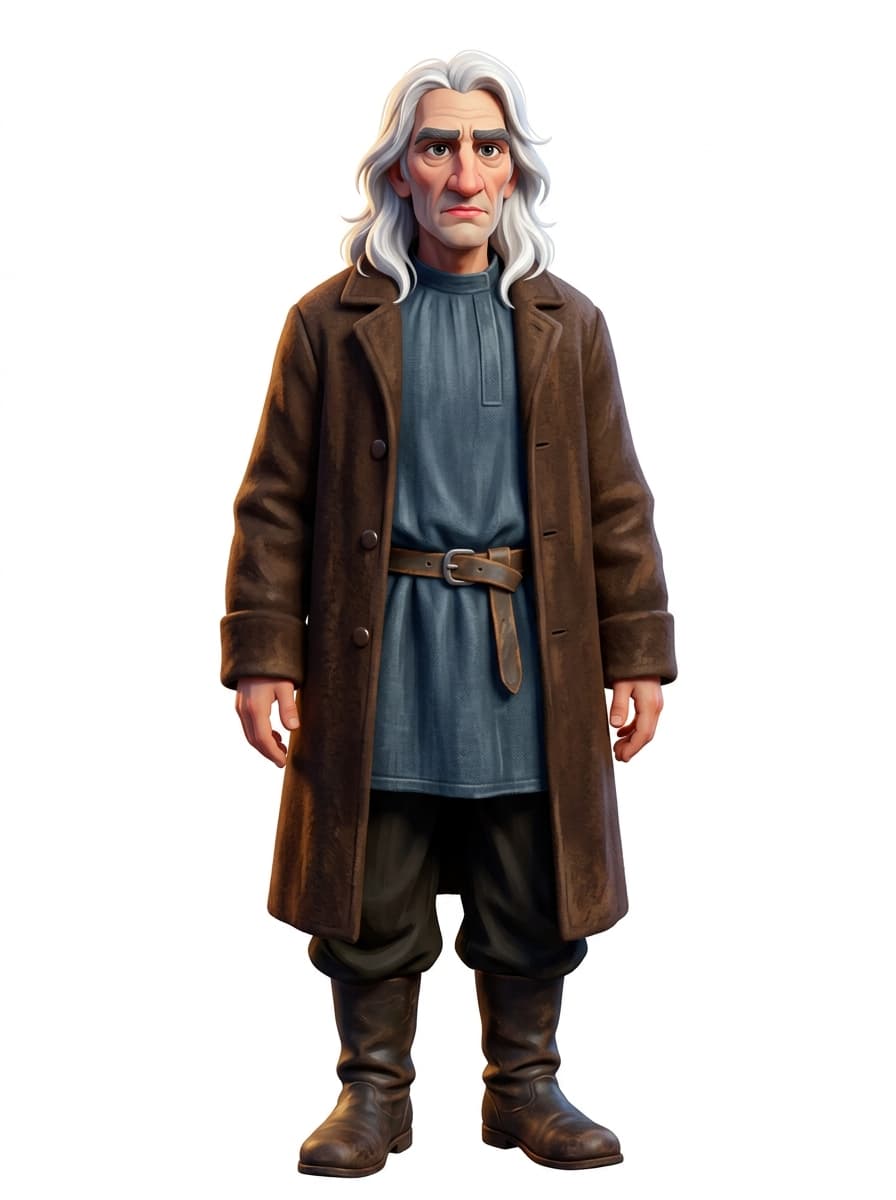
Leo Tolstoy
1828 – 1910
Leo Tolstoy was a Russian novelist widely considered one of the greatest writers in history, best known for his epic novels War and Peace and Anna Karenina. Later in life he became deeply focused on questions of simple living, nonviolence, and spiritual meaning, giving away much of his wealth. His ideas about peaceful resistance directly influenced Mahatma Gandhi, who corresponded with him by letter and later named one of his own communal settlements in South Africa "Tolstoy Farm" in his honor.
Quotes
“The strongest of all warriors are these two — Time and Patience.”
“There is only one enduring happiness in life — to live for others.”
“In countries in which there is a state religion, the children are taught the senseless blasphemies of ecclesiastical catechisms, in which the necessity of obeying the powers is pointed out; in republican governments they are taught the savage superstition of patriotism, and the same imaginary obligation of obeying the authorities.”
“At a more advanced age, this hypnotization is continued by encouraging the religious and the patriotic superstitions.”
“Why do free, wealthy men consider it an honour to perform lackeys' duties to crowned heads, why do they humble themselves, and flatter them, and pretend that they believe in the special grandeur of these persons?”
“Think of your duties,--not of your imaginary duties as a landowner to your estate, of a merchant to your capital, of an emperor, minister, official to the state,--but of those real duties of yours, which result from your real condition of existence, which is called into life and is endowed with reason and love.”
“Nothing, on the contrary, proves the absence of patriotism in the masses with such obviousness as those tense efforts which now are made by the governments and the ruling classes for the artificial excitation of patriotism, and the insignificant results which are obtained in spite of all the efforts.”
“If patriotic sentiments are so proper to the nations, they should be permitted to manifest themselves freely, and should not be provoked by all kinds of exclusive and artificial means, applied on every possible occasion.”
“But how can patriotism be a virtue in our time, when it demands of men what is directly opposed to what forms the ideal of our religion and morality,--not the recognition of the equality and brotherhood of all men, but the recognition of one state and nationality as predominating over all the others.”
“Besides, the conditions of life themselves have so changed now that what we call our country, what we are supposed to distinguish from everything else, has ceased to be something clearly defined, as it was with the ancients, where the men forming one country belonged to one nationality, one state, and one faith.”
“Patriotism is in our time like the scaffolding, which at one time was necessary for the construction of the walls of a building, but which now, though it only interferes with the proper use of the building, is not taken down, because its existence is advantageous for some persons.”
“And so the governments provoke these hostile relations under the guise of patriotism, and then make it appear that they are making peace among the nations.”
“Patriotism in its simplest, clearest, and most unquestionable significance is for the rulers nothing but a tool for attaining their ambitious and selfish ends, and for the ruled a renunciation of human dignity, reason, conscience, and a slavish submission to those who are in power.”
“It is terrible to say so, but there does not exist, and there has not existed, a case of aggregate violence committed by one set of men against another which has not been committed in the name of patriotism.”
“Patriotism now presents to men nothing but the most terrible future; but the brotherhood of the nations forms that ideal which more and more grows to be comprehensible and desirable for humanity.”
“If men only said what they believe, and did not say what they do not believe, there would immediately disappear the superstitions that result from patriotism, and all the evil feelings and all the violence, which are based on them.”
“Just so the Christian nations answer the question which life puts to them, as to which they will choose, patriotism or peace, they answer "Both patriotism and peace," though it is as impossible to unite patriotism with peace, as at the same time to go out driving and stay at home.”
“And so to abolish war, it is necessary to abolish patriotism, and to abolish patriotism, it is necessary first to become convinced that it is an evil, and that it is hard to do.”
“But what produces war is the desire for an exclusive good for one's own nation,--what is called patriotism.”
“Why do not people say that egotism can be good, though this may be asserted more easily, because egotism is a natural sentiment, with which a man is born, while patriotism is an unnatural sentiment, which is artificially inoculated in him?”
“If there were but one patriotism,--the patriotism of none but the English,--it might be regarded as unificatory or beneficent, but when, as now, there are American, English, German, French, Russian patriotisms, all of them opposed to one another, patriotism no longer unites, but disunites.”
“Whether people want it or not, the question stands clearly before humanity: how can that patriotism, from which result innumerable physical and moral calamities of men, be necessary and a virtue?”
“He knew it was Napoleon—his hero—but at that moment Napoleon seemed to him such a small, insignificant creature compared with what was passing now between himself and that lofty infinite sky with the clouds flying over it.”
“Only looking up at the sky did Pierre cease to feel how sordid and humiliating were all mundane things compared with the heights to which his soul had just been raised.”
“The stars, as if knowing that no one was looking at them, began to disport themselves in the dark sky: now flaring up, now vanishing, now trembling, they were busy whispering something gladsome and mysterious to one another.”
“There is only one time that is important—Now! It is the most important time because it is the only time when we have any power.”
“Fortune turns like a wheel. One man it lifts, another it sets down!”