
Authors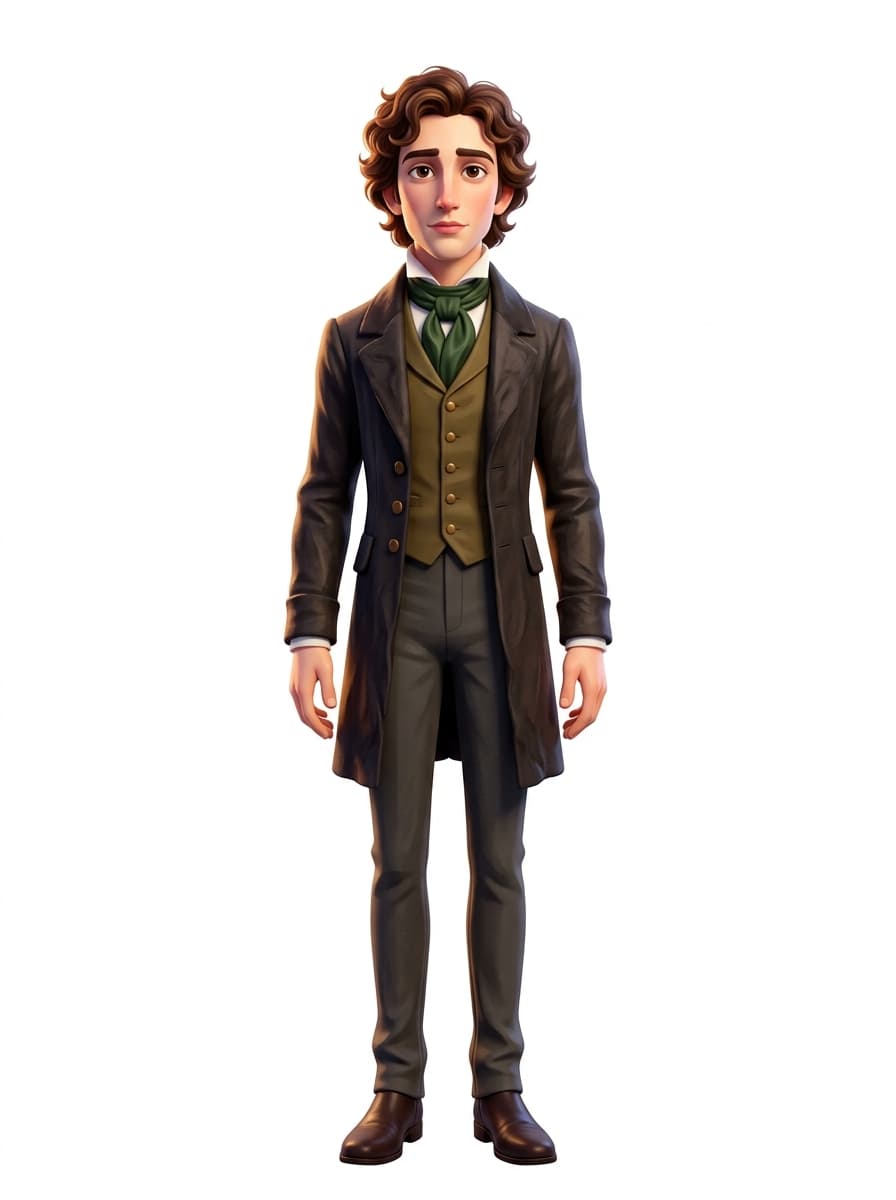
John Keats
1795 – 1821
John Keats was an English Romantic poet who wrote beautifully about beauty, nature, and the shortness of life, after training as a surgeon and qualifying as an apothecary before turning fully to poetry. He died of illness at just 25 years old, having published only a small number of poems in his lifetime, and chose his own epitaph: "Here lies one whose name was writ in water." Today he is considered one of the greatest poets in the English language.
Quotes
“A thing of beauty is a joy forever.”
“I was never afraid of failure; for I would sooner fail than not be among the greatest.”
“If Poetry comes not as naturally as the leaves to a tree, it had better not come at all.”
“Many have original minds who do not think it — they are led away by custom.”
“Nothing is finer for the purposes of great productions than a very gradual ripening of the intellectual powers.”
“Beauty is truth, truth beauty,—that is all Ye know on earth, and all ye need to know.”
“And, as I feasted on its fragrancy, I thought the garden-rose it far excell'd: But when, O Wells! thy roses came to me My sense with their deliciousness was spell'd: Soft voices had they, that with tender plea Whisper'd of peace, and truth, and friendliness unquell'd.”
“Much have I traveled in the realms of gold And many goodly states and kingdoms seen; Round many western islands have I been Which bards in fealty to Apollo hold. Oft of one wide expanse had I been told That deep-browed Homer ruled as his demesne; Yet never did I breathe its pure serene Till I heard Chapman speak out loud and bold: Then felt I like some watcher of the skies When a new planet swims into his ken; Or like stout Cortez when with eagle eyes He stared at the Pacific—and all his men Looked at each other with a wild surmise— Silent, upon a peak in Darien.”
“Whene'er the fate of those I hold most dear Tells to my fearful breast a tale of sorrow, O bright-eyed Hope, my morbid fancy cheer; Let me awhile thy sweetest comforts borrow: Thy heaven-born radiance around me shed, And wave thy silver pinions o'er my head!”
“Bold Lover, never, never canst thou kiss, Though winning near the goal--yet, do not grieve; She cannot fade, though thou hast not thy bliss, For ever wilt thou love, and she be fair!”
“Where are the songs of Spring? Ay, where are they? Think not of them, thou hast thy music too,-- While barred clouds bloom the soft-dying day, And touch the stubble-plains with rosy hue; Then in a wailful choir the small gnats mourn Among the river sallows, borne aloft Or sinking as the light wind lives or dies; And full-grown lambs loud bleat from hilly bourn; Hedge-crickets sing; and now with treble soft The red-breast whistles from a garden-croft; And gathering swallows twitter in the skies.”
“Fade far away, dissolve, and quite forget What thou among the leaves hast never known, The weariness, the fever, and the fret Here, where men sit and hear each other groan; Where palsy shakes a few, sad, last gray hairs, Where youth grows pale, and spectre-thin, and dies; Where but to think is to be full of sorrow And leaden-eyed despairs, Where Beauty cannot keep her lustrous eyes, Or new Love pine at them beyond to-morrow.”
“Thou wast not born for death, immortal Bird! No hungry generations tread thee down; The voice I hear this passing night was heard In ancient days by emperor and clown: Perhaps the self-same song that found a path Through the sad heart of Ruth, when, sick for home, She stood in tears amid the alien corn; The same that oft-times hath Charm'd magic casements, opening on the foam Of perilous seas, in faery lands forlorn.”
“She dwells with Beauty--Beauty that must die; And Joy, whose hand is ever at his lips Bidding adieu; and aching Pleasure nigh, Turning to poison while the bee-mouth sips: Ay, in the very temple of Delight Veil'd Melancholy has her sovran shrine, Though seen of none save him whose strenuous tongue Can burst Joy's grape against his palate fine; His soul shall taste the sadness of her might, And be among her cloudy trophies hung.”
“Ah, happy, happy boughs! that cannot shed Your leaves, nor ever bid the Spring adieu; And, happy melodist, unwearied, For ever piping songs for ever new; More happy love! more happy, happy love! For ever warm and still to be enjoy'd, For ever panting, and for ever young; All breathing human passion far above, That leaves a heart high-sorrowful and cloy'd, A burning forehead, and a parching tongue.”
“Season of mists and mellow fruitfulness, Close bosom-friend of the maturing sun; Conspiring with him how to load and bless With fruit the vines that round the thatch-eves run; To bend with apples the moss'd cottage-trees, And fill all fruit with ripeness to the core; To swell the gourd, and plump the hazel shells With a sweet kernel; to set budding more, And still more, later flowers for the bees, Until they think warm days will never cease, For Summer has o'er-brimm'd their clammy cells.”
“Who hath not seen thee oft amid thy store? Sometimes whoever seeks abroad may find Thee sitting careless on a granary floor, Thy hair soft-lifted by the winnowing wind; Or on a half-reap'd furrow sound asleep, Drows'd with the fume of poppies, while thy hook Spares the next swath and all its twined flowers: And sometimes like a gleaner thou dost keep Steady thy laden head across a brook; Or by a cyder-press, with patient look, Thou watchest the last oozings hours by hours.”
“I cannot see what flowers are at my feet, Nor what soft incense hangs upon the boughs, But, in embalmed darkness, guess each sweet Wherewith the seasonable month endows The grass, the thicket, and the fruit-tree wild; White hawthorn, and the pastoral eglantine; Fast fading violets cover'd up in leaves; And mid-May's eldest child, The coming musk-rose, full of dewy wine, The murmurous haunt of flies on summer eves.”
“Away! away! for I will fly to thee, Not charioted by Bacchus and his pards, But on the viewless wings of Poesy, Though the dull brain perplexes and retards: Already with thee! tender is the night, And haply the Queen-Moon is on her throne, Cluster'd around by all her starry Fays; But here there is no light Save what from heaven is with the breezes blown Through verdurous glooms and winding mossy ways.”
“Bright Star, would I were steadfast as thou art-- Not in lone splendour hung aloft the night, And watching, with eternal lids apart, Like Nature’s patient sleepless Eremite, The moving waters at their priest-like task Of pure ablution round earth’s human shores, Or gazing on the new soft-fallen mask Of snow upon the mountains and the moors-- No--yet still steadfast, still unchangeable, Pillow’d upon my fair love’s ripening breast, To feel for ever its soft fall and swell, Awake for ever in a sweet unrest, Still, still to hear her tender-taken breath, And so live ever--or else swoon to death.”